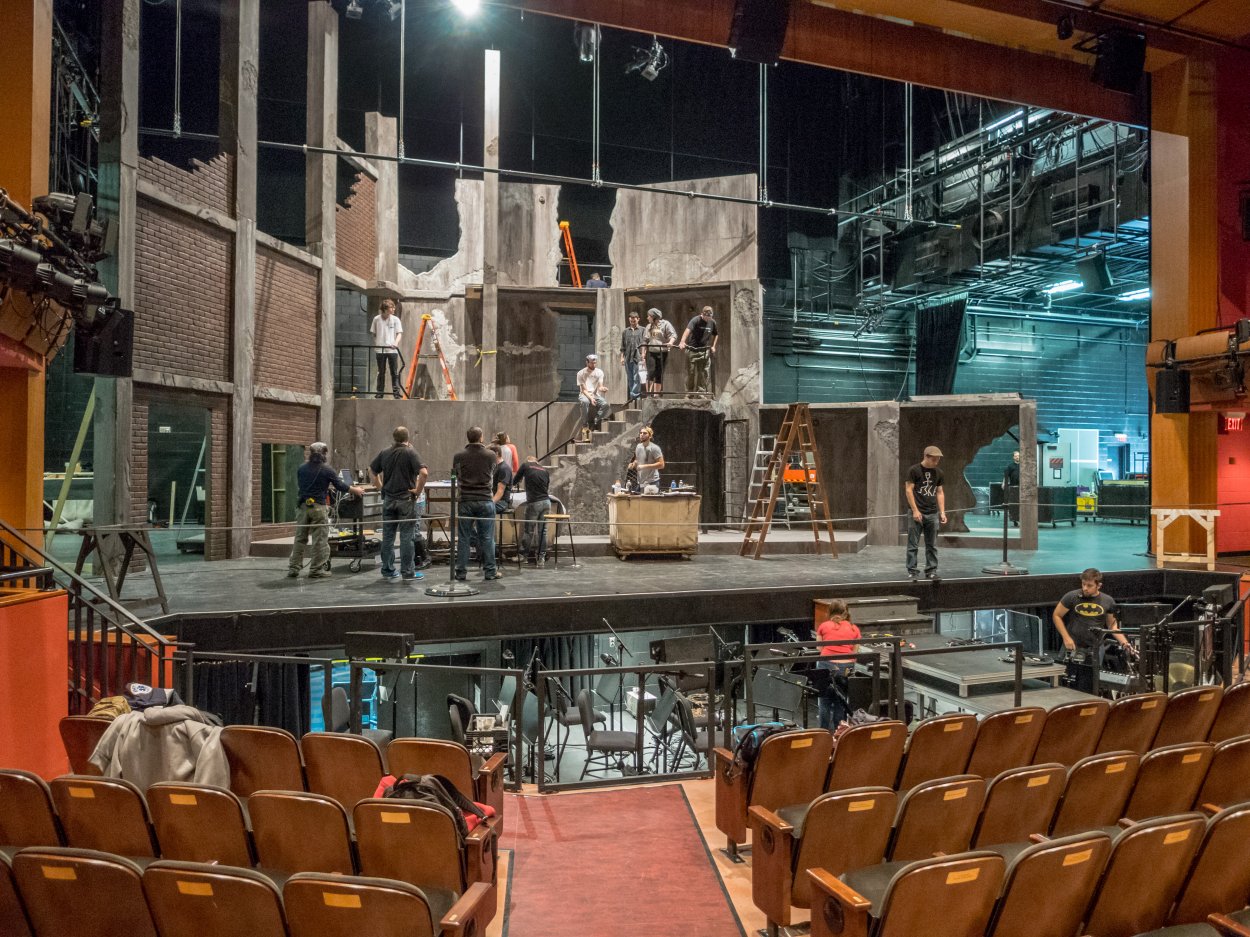
DESIGN IN THEATRE
Theatre design refers to the arrangement and appearance of the stage and everything the audience sees and hears during a play.
It helps to create the setting, mood, and environment of the performance. Good theatre design makes the story clearer, more believable, and more enjoyable.
Major Areas of Theatre Design
- Set Design: This is how the stage is arranged using things like chairs, trees, or buildings to show the place, time, and feeling of the play.
- Costume Design: These are the clothes and items actors wear to show their role, such as who they are, their job, or the time of the story.
- Makeup Design: This is the use of powder, paint, or wigs to change the actor’s face and make them look like the character they are playing.
- Lighting Design: Lights are used to show day or night, and to create different moods like happiness, danger, or sadness.
- Sound Design: This includes background music and sound effects like rain or gunshots to make the play more real and interesting.
Importance of Theatre Design
- It helps to interpret the play and bring the script to life.
- It creates the right mood, atmosphere, and environment for the story.
- It helps the audience understand the setting (place and time) of the play.
- It supports the actors in portraying their roles effectively.
- It makes the performance more enjoyable and believable for the audience.
Qualities of a Good Theatre Designer
- A good theatre designer must have The ability to imagine and create unique and effective designs.
- A good theatre designer must have Understanding of drama, stage movement, and storytelling.
- A good theatre designer must have Good Drawing Skills To sketch and present design ideas.
- A good theatre designer must have Attention to Detail To ensure that all design elements match the play.
- A good theatre designer must have Ability to work with directors, actors, and other designers.
Materials Used in Theatre Design
- Wood and nails (for building sets)
- Paints and brushes (for colouring scenery).
- Fabrics and sewing kits (for making costumes).
- Makeup kits (powder, lipstick, eyeliner, etc.).
- Lights, cables, and switches (for lighting).
- Musical instruments and sound systems (for sound)
People Involved in Theatre Design
- Set Designer – In charge of creating the physical stage setting.
- Costume Designer – Designs and prepares all costumes.
- Makeup Artist – Applies makeup and prepares facial effects.
- Lighting Designer – Plans and controls the lights during the play.
- Sound Designer – Handles sound effects and music.
- Technical Crew – Assist with the building and handling of equipment.
Elements of Design
Elements of design are the basic visual tools and principles used by theatre designers to plan and organize stage elements. These elements help to create balance, mood, focus, and movement on stage. Without them, the stage design will appear flat, confusing, or uninteresting.
These design elements are used in all areas of theatre — from the set and costume, to lighting and makeup. They help in combining creativity with function.
Main Elements of Design
- Line: Lines are used to show direction, shape, or structure on stage; they guide the audience’s eyes to important areas.
Example: Straight lines in a king’s costume show power and seriousness.
- Shape: Shape is the form or outline of objects on stage, like round, square, or natural forms used in design.
Example: A round table in a palace scene, or triangle-shaped rooftops in a village scene.
- Colour: Colour is used to show mood, time, or meaning in a play.
Example: Red can mean danger or love; white can mean peace or purity; black may show mourning.
- Texture: Texture is how things look or feel, such as rough, smooth, soft, or hard, and it makes designs more real.
Example: Rough walls for a village hut; smooth cloth for a rich man's costume.
- Space: Space is how actors and objects are arranged on the stage so everything looks clear and not crowded.
Example: A large empty space in the middle of the stage can show loneliness.
- Value: Value means how light or dark a colour or area is, and it helps to create focus and emotion.
Example: A dark stage with dim light shows night or sadness; bright light shows joy.
- Balance: Balance means arranging stage items so one side does not look heavier than the other.
Example: If there is a tree on one side, a chair or actor can be placed on the other side to balance it.
Why Elements of Design Are Important
- They help to communicate meaning and emotion.
- They create a sense of unity and harmony on stage.
- They guide the audience’s attention to the right places.
- They improve the beauty and professionalism of the performance.
- They make characters, settings, and actions clearer and more believable.
Application of Design Elements in Theatre
|
Area |
How Elements Are Used |
| 1 |
Set Design |
Uses lines and shapes to build realistic environments. Colour and texture make scenes lifelike. |
| 2 |
Costume Design |
Colours show emotion or tradition. Texture and shape define characters. |
| 3 |
Lighting Design |
Value, colour, and space help in setting the mood and focus. |
| 4 |
Makeup Design |
Lines, colour, and texture help show age, wounds, beauty, or emotion. |
| 5 |
Sound and Movement |
Although sound is not visual, good design uses space and timing to work with sound for full effect. |